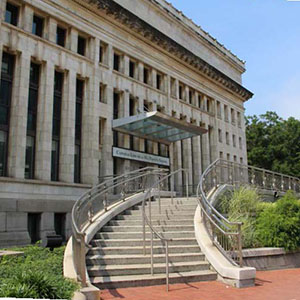
View Project
Details
EHT Traceries provides expert technical guidance to public, private, and institutional clients to develop and implement strategies for the treatment and long-term stewardship of historic resources. We specialize in coordinating regulatory compliance reviews—including National Environmental Policy Act (NEPA) and Section 106 of the National Historic Preservation Act—at the local, state, and federal level to further planning objectives and foster a meaningful dialogue among stakeholders.
Public Space, etc.

Historic preservation planning is the process of developing strategies to protect, rehabilitate, and manage historic buildings, sites, and cultural landscapes for long-term stewardship. It typically includes research, documentation, regulatory review, and planning tools such as master plans, design guidelines, and cultural resource management strategies.
Preservation planning is commonly used for historic buildings, campuses, neighborhoods, cultural landscapes, and redevelopment projects. It is especially valuable when projects require regulatory approvals, adaptive reuse planning, or long-term management strategies for historically significant resources.
Preservation planners help coordinate reviews required by regulations like the National Environmental Policy Act (NEPA) and Section 106 of the National Historic Preservation Act. These processes ensure that federal or federally funded projects consider impacts on historic properties and involve consultation with agencies and stakeholders.
Preservation planning services may include master planning, agency review, entitlement coordination with preservation commissions and planning boards, design guidelines, feasibility studies, cultural resource management, and planning for historic rehabilitation or adaptive reuse.